
Project overview
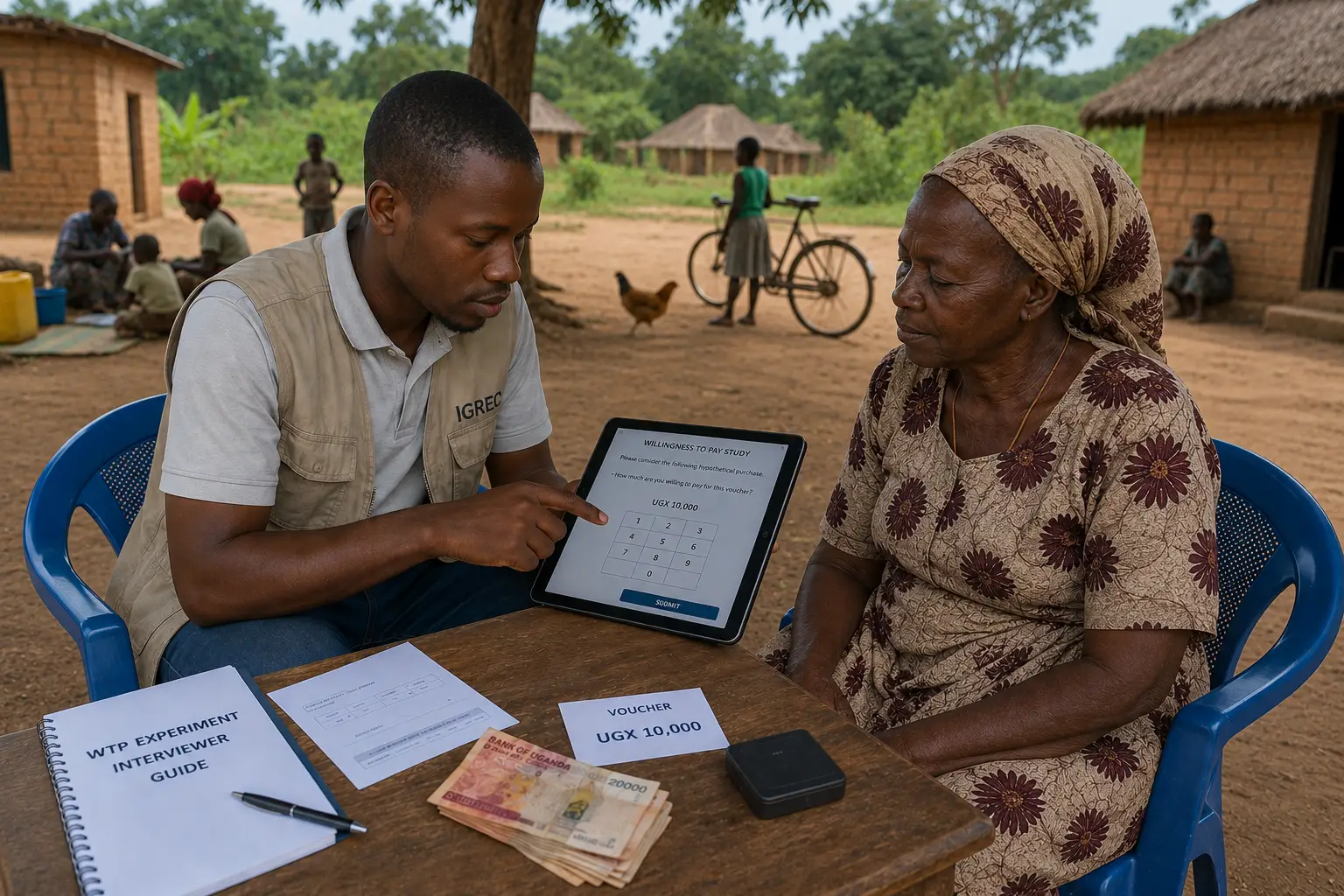
Focusing on variants of the Becker–DeGroot–Marschak (BDM) mechanism, the research examines how different experimental design features influence participant comprehension, trust in the mechanism, and bidding behaviour.
The study found that participants demonstrated a high level of understanding of the mechanism, with 86 percent submitting optimal bids for an induced-value voucher. Participant comprehension and bidding performance showed minimal variation across the alternative implementation approaches, suggesting that practical adaptations to the BDM mechanism do not substantially reduce the quality of the data collected.
Research impact
The research provides important methodological evidence supporting the use of simplified willingness-to-pay elicitation techniques in field settings. Its findings strengthen the design of behavioural and development economics experiments by demonstrating that implementation efficiency can be improved without compromising participant understanding or data quality.
Read the associated research publication: View publication